


How Councils Use Municipal Operational Reporting Data

Modern municipal councils are under increasing pressure to make informed decisions, control costs, improve transparency, and respond quickly to resident concerns.
Across Canada, municipalities are turning to operational reporting data to better understand what is happening within their communities on a daily basis. From road maintenance and snow clearing to fleet management and infrastructure usage, reporting data has become one of the most valuable tools available to councils and municipal administrators.
Across Canada, municipalities are turning to operational reporting data to better understand what is happening within their communities on a daily basis. From road maintenance and snow clearing to fleet management and infrastructure usage, reporting data has become one of the most valuable tools available to councils and municipal administrators.
Turning Daily Operations into Measurable Insight
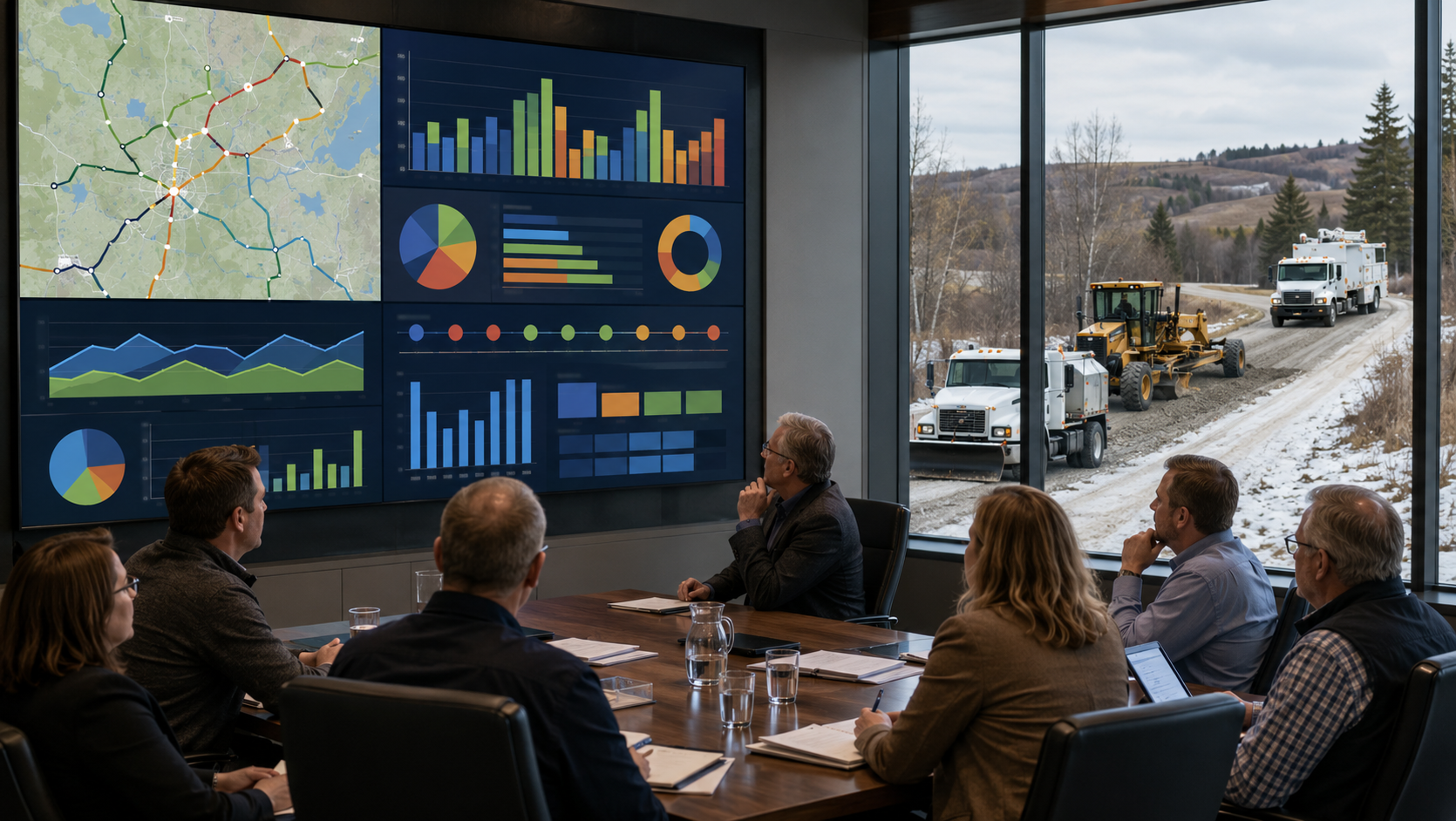
Operational reporting transforms everyday municipal activities into measurable information. Instead of relying solely on verbal updates, handwritten logs, or assumptions, councils can review accurate reports, maps, timelines, and equipment activity records that clearly show what work has been completed, when it occurred, and how resources were used.
Strengthening Accountability
One of the most important uses of operational reporting data is improving accountability. Councils are responsible for overseeing public spending and ensuring taxpayers receive proper value from municipal operations. Detailed reporting allows councillors to verify that equipment and staff are being utilized effectively. For example, grader reports may show actual working hours, routes travelled, and areas serviced during snow removal or road maintenance operations. This creates a factual operational history that can be reviewed at any time.
Supporting Better Budgeting and Planning
Reporting data also greatly improves decision-making during budgeting and planning. Municipal councils often face difficult choices regarding equipment purchases, staffing levels, maintenance schedules, and infrastructure investments. Operational reports provide measurable evidence to support these decisions. If reports show that certain roads require repeated maintenance, or specific equipment experiences excessive idle time or downtime, councils can identify inefficiencies and prioritize improvements more effectively.
Improving Snow Removal and Fleet Efficiency
Snow removal operations are one area where reporting data has become especially valuable. Councils can review map-based reports showing exactly which roads were cleared, when the work occurred, and how long equipment operated in each area. This information helps municipalities respond to public complaints with confidence and transparency. Rather than relying on estimates or radio communication records, administrators can reference actual operational data to verify service delivery.
Fleet reporting data is also widely used to reduce operational costs. Councils can monitor fuel usage, idle times, equipment utilization, maintenance intervals, and travel patterns across municipal fleets. Over time, this information helps municipalities reduce unnecessary fuel consumption, improve routing efficiencies, and extend equipment lifespan. Even small improvements in operational efficiency can create substantial savings for municipalities operating under tight budgets.
Fleet reporting data is also widely used to reduce operational costs. Councils can monitor fuel usage, idle times, equipment utilization, maintenance intervals, and travel patterns across municipal fleets. Over time, this information helps municipalities reduce unnecessary fuel consumption, improve routing efficiencies, and extend equipment lifespan. Even small improvements in operational efficiency can create substantial savings for municipalities operating under tight budgets.
Strengthening Communication and Public Transparency
Another major benefit is improved communication between councils, administration, and public works departments. Monthly operational reports provide a clear summary of activities without requiring constant phone calls or manual updates. Councillors can stay informed about ongoing work, project progress, and equipment deployment throughout the municipality. This allows councils to focus more on planning and governance rather than spending time tracking day-to-day operational details.
Public transparency is another growing reason councils rely on operational reporting data. Residents increasingly expect municipalities to provide accurate information about services and response times. Operational reporting systems allow municipalities to provide factual answers supported by real data. Some municipalities even use public-facing maps to show recently completed snow clearing or road maintenance activities, helping reduce resident complaints and improving public confidence.
Public transparency is another growing reason councils rely on operational reporting data. Residents increasingly expect municipalities to provide accurate information about services and response times. Operational reporting systems allow municipalities to provide factual answers supported by real data. Some municipalities even use public-facing maps to show recently completed snow clearing or road maintenance activities, helping reduce resident complaints and improving public confidence.
An Essential Tool for Modern Municipal Governance
As municipalities continue adopting technology-based operational systems, councils are gaining access to more powerful reporting tools than ever before. Real-time data, automated reports, GPS mapping, and historical operational records are helping municipal leaders make smarter decisions, improve accountability, and operate more efficiently.
In today’s municipal environment, operational reporting data is no longer simply useful information — it has become an essential management and governance tool for councils seeking to improve service delivery, control costs, and strengthen public trust.
In today’s municipal environment, operational reporting data is no longer simply useful information — it has become an essential management and governance tool for councils seeking to improve service delivery, control costs, and strengthen public trust.

Blog title heading will go here
Lorem ipsum dolor sit amet, consectetur adipiscing elit. Suspendisse varius enim in eros.
Blog title heading will go here
Lorem ipsum dolor sit amet, consectetur adipiscing elit. Suspendisse varius enim in eros.
Blog title heading will go here
Lorem ipsum dolor sit amet, consectetur adipiscing elit. Suspendisse varius enim in eros.
Blog title heading will go here
Lorem ipsum dolor sit amet, consectetur adipiscing elit. Suspendisse varius enim in eros.
All Articles

5 Ways Rural Municipalities Improve Efficiency with GPS
Across Canada, rural municipalities are under constant pressure to do more with limited budgets, aging infrastructure, and small operational...

A Digital Revolution for Gravel Roads
Maintaining gravelroads has always been a demanding and deeply essential responsibility for rural and municipal governments. Each season, operators steer graders across hundreds—sometimes thousands...
How Councils Use Municipal Operational Reporting Data
Modern municipal councils are under increasing pressure to make informed decisions, control costs, improve transparency, and respond quickly to resident concerns. Across Canada...

Municipal Grader Tracking Improves Accountability
Across Canada, rural municipalities and public works departments faceincreasing pressure to provide better service with limited budgets, aging equipment, and fewer available...

Material Haulage: Tracking the Load
Municipal roadmaintenance, gravel delivery, and aggregate spreading have long been essential yet logistically complex tasks for rural and regional governments. Where loads are dropped, how much material is used, and whether crews followed optimal...